
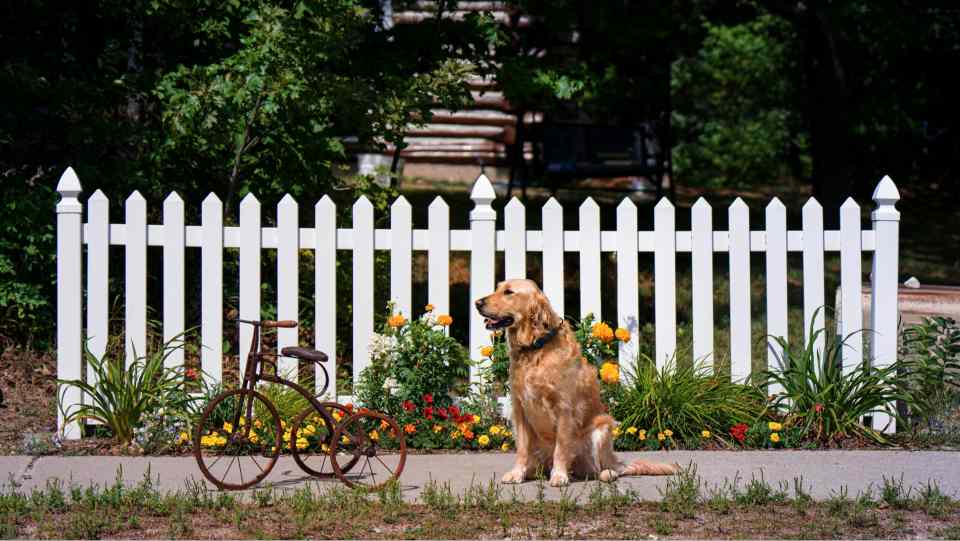
Best Dog Fence in 2026: The Complete Buying Guide
This post contains affiliate links. If you buy through a link on this page, we may earn a small commission at no extra cost to you.
If your dog treats your yard like a starting line instead of a safe space, you’re not alone.which is exactly why finding the best dog fence for your situation matters the second a squirrel shows up, the right fence can be the difference between a relaxed afternoon outside and a frantic search around the neighborhood.
The tricky part is that “dog fence” doesn’t mean just one thing anymore. You can bury a wire, plug in a wireless transmitter, or strap a GPS collar on your dog and skip the hardware entirely. Each option works differently, and the “best” one really depends on your yard, your dog, and how much setup you’re willing to do.
This guide breaks down the real differences between fence types, walks through the top options in each category, and helps you figure out exactly what fits your situation — without the sales pitch.

Quick Answer: What’s the Best Dog Fence?
If you just want a quick answer on the best dog fence before diving into the details:
- Best overall / easiest setup: A wireless transmitter fence (like PetSafe’s wireless containment systems) — plug it in, set the range, done.
- Best for large or oddly shaped yards: An in-ground wired fence (like SportDOG’s in-ground systems) — you dig a boundary wire wherever you want, so the shape isn’t limited to a circle.
- Best for stubborn or high-energy dogs, and travel: A GPS collar fence (like SpotOn or Halo) — no transmitter needed, works anywhere with satellite coverage, and can double as an off-leash tracking collar.
Now let’s get into why.
Types of Dog Fences, Explained Simply
1. Wireless Fences
A wireless fence uses a transmitter, usually plugged in near your house, to broadcast a signal in a circle around it. Your dog wears a collar that picks up the signal and warns them (beep, vibration, or a mild static correction) as they approach the edge. Makes this one of the best dog fence options for renters and small yards.
Good for: Small to medium yards, renters, people who travel with their dog and want a portable setup. Limitation: The boundary is a circle, so it doesn’t hug property lines exactly — you may need to shrink the range to avoid covering a neighbor’s yard or the street.
2. In-Ground (Wired) Fences
These use a physical wire buried a few inches underground, following whatever shape you want your yard boundary to be. A transmitter sends a signal through the wire, and the dog’s collar reacts as they near it. Often considered the best dog fence choice for large or oddly shaped yards.
Good for: Large properties, irregularly shaped yards, permanent installations. Limitation: More labor to install (you’re burying wire), and a break in the wire means troubleshooting to find the fault.
3. GPS Fences

Instead of wires or a transmitter, GPS fences rely on satellite positioning built into the collar itself. You draw your boundary in an app, and the collar tracks your dog’s location directly. Frequently ranked as the best dog fence solution for large acreage.
Good for: Large acreages, hiking or camping with your dog, dogs that need boundaries in more than one location. Limitation: Generally the most expensive option, some models need a subscription, and accuracy can dip under heavy tree cover.
Here’s a quick side-by-side look at the best dog fence picks in each category:
Top Picks by Category
| Fence Type | Best For | Coverage | Setup Effort | Price Range |
|---|---|---|---|---|
| Wireless (PetSafe-style) | Small-medium yards, portability | Up to ~3/4 acre | Low | $150–$400 |
| In-Ground (SportDOG-style) | Large or custom-shaped yards | 1/3 acre up to 100+ acres (expandable) | High (digging required) | $250–$600 |
| GPS Collar (SpotOn/Halo-style) | Large land, travel, off-leash training | Unlimited (satellite-based) | Low (no digging) | $600–$1,200+ (some with subscription) |
Prices are approximate and vary by retailer and package — always check the current listing before buying.
What to Look For Before You Buy
Before picking the best dog fence for your yard, consider these factors:
Yard Size and Shape
Half an acre is usually the rough cutoff between wireless and in-ground being the more practical choice. If your yard is oddly shaped, wooded, or bigger than an acre, a wired or GPS system will fit the space better than a circular wireless boundary.
Your Dog’s Size and Temperament
Smaller or more sensitive dogs generally do better with a fence that has a true tone-only mode, not just a low static setting. Bigger, more strong-willed dogs — the kind that will run through a mild correction without slowing down — need adjustable static levels strong enough to actually get their attention.
Battery Life and Charging
Rechargeable collars save you from buying proprietary batteries every few months. If you’re forgetful about charging, look for a model with a longer battery life (some GPS collars now run 30+ hours per charge) so a missed charge doesn’t leave your dog unprotected for a day.
Multiple Dogs
Most wireless and in-ground systems support additional collars on the same transmitter, so you’re only paying for extra collars, not a whole new setup. GPS fences usually require a full collar per dog, which adds up faster.
Weather and Terrain
If your property has heavy tree cover or hills, GPS accuracy can suffer. A wired in-ground fence isn’t affected by this, since it follows a physical wire rather than a satellite signal.
Installation and Training Tips
A fence — any fence — is only as good as the training behind it. A few things that make a real difference:
- Use the training flags. Most systems come with small flags to mark the boundary visually while your dog learns where it is. Don’t skip this step even if it feels unnecessary.
- Start with short, supervised sessions. Let your dog experience the warning tone and, if applicable, the correction while you’re right there to guide them back.
- Call 811 before digging. If you’re installing an in-ground wire, getting utility lines marked first avoids a bad afternoon.
- Check the wire periodically. For wired fences, an occasional walk along the buried line can catch a break before it becomes a bigger problem.
Frequently Asked Questions
What is the best dog fence overall?
There’s no single best dog fence for every situation — the right choice depends on your yard size, your dog’s temperament, and your budget. For most yards under an acre, a wireless fence is the easiest best dog fence option to set up quickly.
Are electric dog fences safe? Used correctly, most wireless and in-ground fences deliver a static correction closer to a static shock from touching a doorknob than anything harmful. That said, they’re not a substitute for training, and dogs should always be supervised, especially early on.
Do wireless dog fences work in the rain? Yes — most modern collars are waterproof or at least water-resistant, and the radio signal isn’t affected by rain. Heavy storms can occasionally cause temporary signal interference, but this is uncommon.
Can I install a dog fence myself? Generally, yes. Wireless and GPS fences usually just need setup through an app or a quick physical placement. In-ground fences take more effort since you’re burying wire, but most kits are designed for a DIY weekend project.
What size dog is a fence suitable for? Most systems are built for dogs over 8–10 pounds and older than about 6 months. Very small or very young puppies may need a different containment solution until they’re a bit bigger.
How much land can these fences cover? Wireless fences typically cover up to about 3/4 acre. In-ground wired fences can be expanded with additional wire to cover very large properties — some systems support up to 100 acres. GPS fences aren’t limited by wire length at all, since they rely on satellite boundaries.
Final Thoughts
There’s no single best dog fence for every yard — the right pick depends on how much space you’re working with, how determined your dog is to test the boundary, and whether you’d rather dig a trench once or manage an app instead. Start with your yard size and your dog’s personality, and the right category (wireless, in-ground, or GPS) usually becomes obvious pretty quickly.
If you’re still deciding between two options, our in-depth reviews of [wireless dog fences] and [in-ground dog fences] break down specific models side by side.
Shakeel Ahmed
Dog fence reviewer, BarkBoundary
Shakeel has tested wireless and in-ground dog fences since [2019] and owns [german shepherd]. His reviews focus on real durability, battery life, and safety for different dog temperaments.


3 Comments