Why Dogs Lean Against You: The Sweet Reason Will Melt Your Heart
You’re standing in the kitchen, and suddenly your dog presses his entire body against your leg like he’s trying to disappear into you. No treat in sight. No obvious reason at all.
If you’ve ever paused mid-task and wondered why dogs lean against you the way they do, you’re asking the right question — because it’s rarely random. Many owners assume it’s clinginess or bad manners, but veterinary behaviorists say it’s usually the opposite: a sign of deep trust.
Understanding why dogs lean against you can completely change how you see this small, everyday moment — and occasionally, it can help you catch a health issue early too.
At a Glance: Why Dogs Lean Against You
| Observed Behavior / Sign | What It Means | Immediate Owner Action |
|---|---|---|
| Slow, relaxed lean + soft eyes | Deep trust and affection | Pet or scratch gently in return |
| Lean during thunder/fireworks | Anxiety, seeking comfort | Stay calm, offer steady contact |
| Lean + staring at you or your hands | Wants attention or something specific | Check food, walk, or bathroom needs |
| Lean that helps them stay balanced | Possible physical issue | Monitor closely; consider a vet visit |
| Lean only toward one person | That person is their safety anchor | Completely normal — no action needed |
| Lean + head tilt or stumbling | ⚠️ Neurological or inner-ear concern | Contact your vet promptly |
Dogs Don’t Hug — So They Lean Instead
Humans show affection through hugs and hand-holding, which is part of why dogs lean against you in the first place. Dogs simply don’t have the anatomy for that, so they’ve developed their own version.
Pressing their body weight into you is the closest physical equivalent to a hug in the entire canine communication toolkit. This is one of the biggest reasons why dogs lean against you specifically, rather than just sitting nearby.
- A relaxed lean signals: “I feel safe enough to be this close.”
- It’s almost always reserved for people the dog trusts completely.
- The lean itself is the message — there’s rarely anything more complicated happening.
Have you noticed your dog never does this with strangers or delivery drivers? That’s trust, made physical.
When the Lean Means “I’m Scared, Help Me”
Not every lean is calm and happy. Sometimes it appears suddenly, tense, and out of nowhere — usually during storms, fireworks, or vet visits, which is another common answer to why dogs lean against you in stressful moments.
In these moments, your dog isn’t just seeking affection. He’s borrowing your steadiness to calm his own nervous system.
- Deep, steady pressure is the same principle behind calming wraps and weighted vests for dogs.
- Your leg, in that moment, is functioning as a living pressure vest.
- The best response is simple: stay physically present and avoid frantic reassurance, which can heighten anxiety instead of easing it.
If your dog does this during storms, sitting on the floor beside them can help more than you’d expect.
Sometimes It’s Simpler: “Notice Me, Please”
Not every lean is emotional — some are purely strategic, and this attention-seeking angle is a big piece of why dogs lean against you even when nothing’s wrong. Dogs learn quickly which behaviors get a reaction from you.
If leaning gets you to look up from your phone or get out of your chair, your dog will absolutely repeat it on purpose.
- Common triggers: mealtime approaching, wanting a walk, boredom, or noticing you’re distracted.
- Test it yourself — does the lean intensify the second you pick up your phone?
- This kind of lean is completely normal and harmless.
The Trust Factor: Why Only You Get the Lean
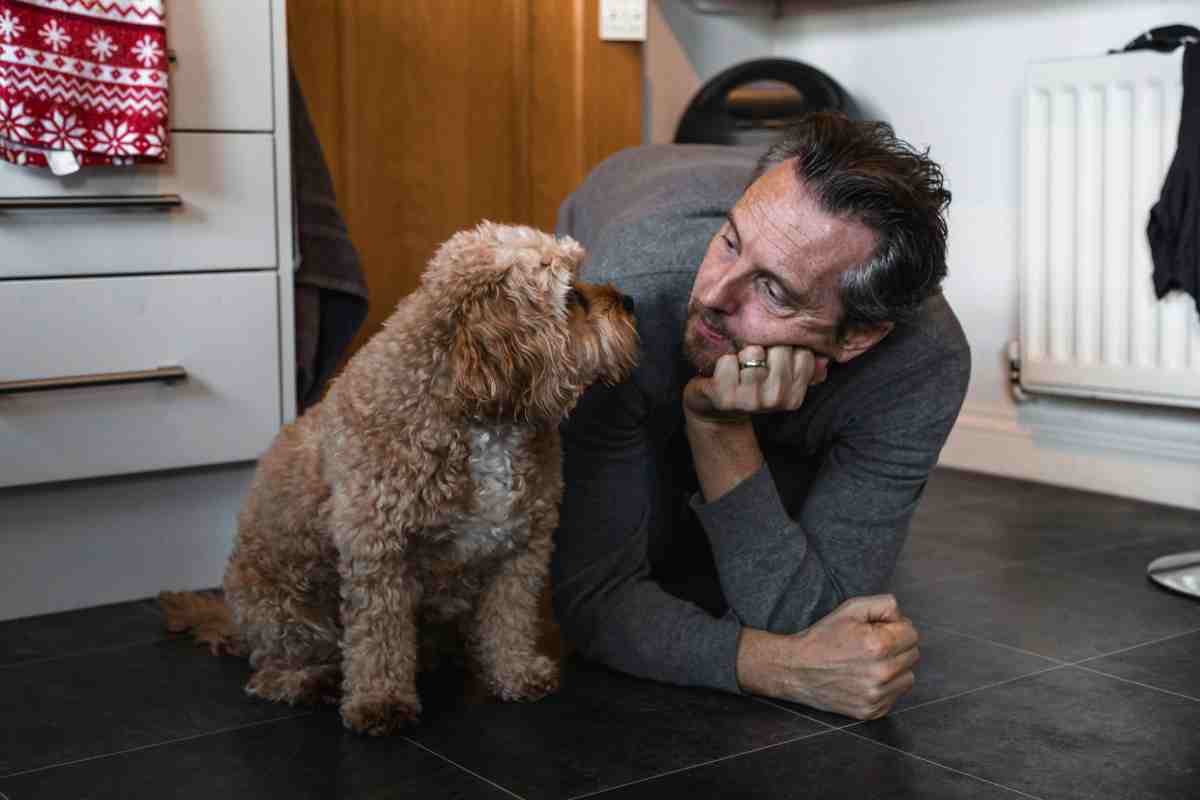
Ever notice your dog leans on you specifically, and not on your partner or kids? This is one of the clearest clues behind why dogs lean against you and not someone else in the house — and it isn’t favoritism drama, it’s about vulnerability.
Leaning puts a dog in a slightly off-balance position, and instinctively, they only allow that around whoever they consider their primary safety figure.
- This bond can shift over time, based on who feeds, walks, or comforts them most consistently.
- A dog leaning on one person is a sign of secure attachment, not exclusion of others.
- If the “chosen” person changes, it usually reflects a real shift in daily bonding.
Older Dogs Lean More — And That’s Usually Okay
If your senior dog has started leaning more than before, you’re not imagining the change. Age is another quiet answer to why dogs lean against you more as time goes on — aging dogs often seek more physical contact as their senses shift.
- Slightly reduced vision or hearing can make close contact more comforting.
- Mild joint stiffness sometimes means dogs prefer leaning over standing unsupported.
- This is often a normal part of aging — but it’s still worth monitoring (see the checklist below).
How to Respond When Your Dog Leans on You
There’s no complicated fix required here once you understand why dogs lean against you in the first place. The correct response is almost always simply — lean back.
- Rest a hand on their side or scratch behind the ears.
- Avoid pulling away immediately, even if the timing feels inconvenient.
- Recognize the moment for what it is: a small act of trust, freely given.
When to See a Vet (Safety Checklist)
Most of the time, why dogs lean against you has a simple, harmless explanation — but it helps to know the difference between normal and concerning.
Completely normal — no action needed:
- Slow, relaxed leaning with a soft or sleepy expression
- Leaning that increases during storms or vet visits
- Leaning tied to mealtime, walks, or wanting attention
- Gradual increase in leaning as your dog ages
Contact your vet if you notice:
- Sudden leaning that’s completely new for your dog
- Leaning that seems to help them stay upright or avoid falling
- Leaning paired with head tilting, stumbling, or circling
- Confusion or disorientation alongside the leaning
If anything on that second list sounds familiar, a quick vet visit can rule out balance or neurological issues early.
Frequently Asked Questions
Do dogs lean on you to say “I love you”? Yes — this is one of the most common answers to why dogs lean against you, since a slow, relaxed lean is one of the clearest affection signals a dog can give. It reflects deep comfort and attachment rather than any single problem needing a fix.
Is dog leaning a sign of anxiety? It can be — this is one of the more stress-related sides of why dogs lean against you, especially if it happens suddenly during loud noises or unfamiliar situations. Context matters — the same behavior can mean comfort-seeking in one moment and anxiety relief in another.
Why does my dog only lean on one person in the house? This is one of the most personal versions of why dogs lean against you — it usually reflects who the dog considers their primary source of safety, often based on who spends the most consistent one-on-one time with them. It’s a sign of secure attachment, not rejection of anyone else.
Final Thoughts
At the end of a long day, it’s easy to overthink every little thing your dog does. But why dogs lean against you really comes down to something simple: they’re choosing closeness, on purpose, because being near you feels like the safest place in the world.
So next time you feel that familiar weight settle against your leg, don’t rush to move away. Lean back, even just a little — it’s your dog’s quiet way of saying I trust you completely, and that’s always worth a pause.
Shakeel Ahmed
Dog fence reviewer, BarkBoundary
Shakeel has tested wireless and in-ground dog fences since [2019] and owns [german shepherd]. His reviews focus on real durability, battery life, and safety for different dog temperaments.