Why Your Dog Keeps Crossing ‘The Line’ — And How Nature Fixes It
You plant a garden bed, line the yard with flags, and say “no” a hundred times. Your dog steps right over it anyway, tail wagging like nothing happened. This is exactly why so many owners turn to dog boundary lines using natural markers — it feels like defiance, but it almost never is.
Dogs don’t process abstract lines the way people do. They read the world through scent and texture, which is exactly why dog boundary lines using natural markers work so much better than invisible fences or verbal commands alone.
As one veterinary behaviorist explains it: “Dogs don’t understand abstract boundaries — they understand physical and sensory changes in their environment. Once a line has a smell or texture, it becomes real to them.”
This guide walks through exactly how to set up dog boundary lines using natural markers, step by step, so your dog learns to respect the space without fear, shock collars, or constant supervision.
At A Glance: Boundary Training Signals
| Observed Behavior / Sign | What It Means | Immediate Owner Action |
|---|---|---|
| Dog freezes or sniffs hard at the marker edge | They’ve noticed the sensory change — this is your training window | Reward calmly, don’t call them past it |
| Dog steps over the line without pausing | The natural marker isn’t distinct enough yet | Widen the strip or use a stronger-scented material |
| Dog paces the edge but won’t cross | The boundary is working; some mild stress may exist | Praise calmly, redirect with a toy |
| Dog digs at the marker material | Curiosity or stress, not disobedience | Swap texture, reinforce with treats |
| Dog respects the boundary only when you’re nearby | Training hasn’t generalized yet | Add long-line practice and short absences |
| Dog seems completely unbothered by the marker | Signal is too subtle or reward history is missing | Restart with high-value treats right at the edge |
Why Dog Boundary Lines Using Natural Markers Work Better Than Invisible Fences
Most dogs experience their yard through their nose long before their eyes. An invisible line drawn from human logic simply doesn’t register the same way a scent or texture change does.
A physical shift underfoot — mulch, gravel, stone, or a low hedge — gives your dog a signal they can actually process. This is why trainers increasingly recommend natural markers over shock-based systems, especially for anxious or sensitive dogs.
- Dogs generalize faster from consistent sensory cues than from human gestures
- Texture changes trigger a natural pause-and-sniff response you can reward
- Natural markers keep working even when you’re not standing right there
Step 1: Pick a Marker Your Dog’s Nose Will Notice
Not all materials work equally well for dog boundary lines using natural markers. Choose something with a scent and texture that clearly differs from your lawn or patio.
- Cedar or pine mulch — strong natural scent, simple to install along garden edges
- River rock or pea gravel — sharp texture shift underpaw
- Low boxwood or lavender hedging — living border with built-in scent reinforcement
- Crushed shell or decomposed granite — durable and highly tactile
The stronger the sensory contrast, the faster your dog learns the line is real.
Step 2: Introduce Dog Boundary Lines Using Natural Markers On Leash First
Never let your dog discover a new natural marker alone. First impressions shape how seriously they take the boundary later.
- Walk your dog to the marker on a standard 6-foot leash
- Let them sniff the material fully, without pressure or rushing
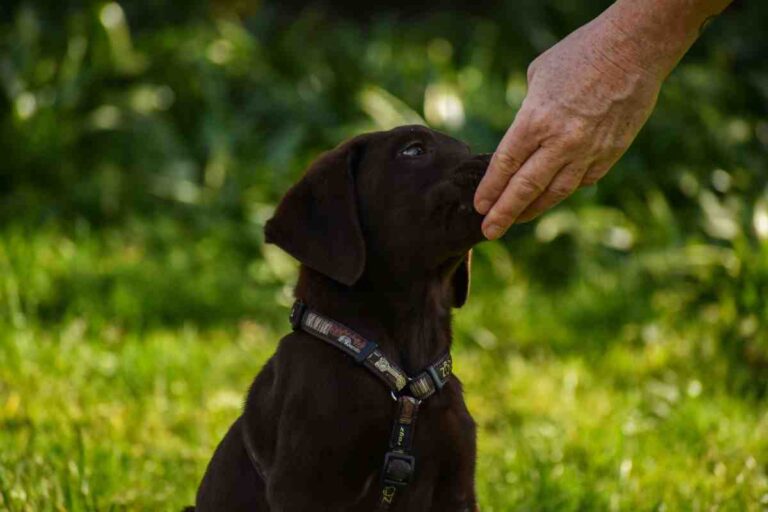
- The moment they pause at the edge, mark it with a calm “yes” and a treat
- Repeat 5–10 times per session, twice daily during week one
This single step prevents most “my dog just walks right through it” complaints.
Step 3: Reward the Pause, Not Just the Retreat
A common mistake is rewarding only when a dog backs away from the line. That teaches avoidance, not genuine boundary respect.
- Reward calm attention at the edge, even if they don’t step back
- Guide them back gently if they cross, without scolding
- Avoid fear-based corrections — anxiety undermines the whole lesson
Dogs trained through calm reinforcement hold boundaries more reliably long-term than dogs trained through punishment. This calm approach is at the heart of every successful attempt at dog boundary lines using natural markers.
Step 4: Add Distance and Distraction Gradually
Once your dog reliably pauses at the marker with you standing close, raise the difficulty slowly.
- Practice from 10, then 20, then 30 feet away
- Add mild distractions — a ball, a visitor, another leashed dog
- Only try off-leash practice inside a fully fenced area, as a final step
Rushing this stage is the single biggest reason boundary training fails.
Refresh the Marker Seasonally
Mulch compresses, gravel scatters, and scent fades with weather. Refresh natural markers every few months so the sensory signal stays strong, especially after heavy rain or snow.
Step 5: Generalize Dog Boundary Lines Using Natural Markers Without You Present
A boundary that only holds when you’re watching isn’t fully trained yet.
- Use a long line (15–30 feet) for supervised independence
- Step inside briefly while watching through a window
- Gradually stretch the time you’re out of sight
Consistency measured in weeks, not days, is what makes dog boundary lines using natural markers permanent.
Step 6: Troubleshoot Common Setbacks With Dog Boundary Lines Using Natural Markers
- Digging at the marker: Often boredom, not defiance — add enrichment elsewhere in the yard
- Selective respect near the house only: Extend the marker around the full perimeter; gaps confuse dogs
- Regression after storms: Refresh scent and texture, since weather genuinely resets the sensory cue
When to See a Vet (Safety Checklist)
Most confusion around dog boundary lines using natural markers is simply a training gap, but a few signs point to something bigger.
Normal: Occasional sniffing or testing of a new marker during week one Normal: Mild hesitation or pacing near an unfamiliar texture Normal: Slower progress in senior dogs or dogs with limited scent exposure
See a vet or behaviorist if: Your dog shows sudden, extreme fear of textures they previously walked on fine See a vet or behaviorist if: Repetitive digging, whining, or pacing persists past two weeks of consistent training See a vet or behaviorist if: Your dog shows aggression, panic, or shutdown near the boundary area
Frequently Asked Questions
Do dog boundary lines using natural markers actually work better than invisible fences? For most dogs, yes — natural markers rely on scent and texture rather than an electric correction the dog never sees coming. This avoids the fear response some dogs develop with shock-based systems.
How long does it take to train dog boundary lines using natural markers? Most dogs show solid understanding within 2–4 weeks of consistent daily practice. Full independence without supervision can take 6–8 weeks depending on age and temperament.
Can this method work for puppies? Yes, and earlier is often easier since puppies haven’t formed contrary habits yet. Keep sessions short, around 5 minutes, and rely heavily on positive reinforcement rather than correction.
Final Thoughts
Your dog isn’t trying to break the rules — they simply need a rule they can actually sense. Set up dog boundary lines using natural markers, stay patient through the early confused steps, and watch that confusion turn into quiet, confident trust. That’s not just good training — it’s a small, steady act of love.
Shakeel Ahmed
Dog fence reviewer, BarkBoundary
Shakeel has tested wireless and in-ground dog fences since [2019] and owns [german shepherd]. His reviews focus on real durability, battery life, and safety for different dog temperaments.