Invisible Fence Training Flags: The Step Most Owners Skip
Your dog can’t see the boundary. That is the whole problem.
Invisible fence training flags give your dog a visual landmark, so the warning tone finally makes sense. Skip them, or pull them too early, and many dogs learn only one thing: how to run through a line.
This guide covers how to use boundary flags the right way, from placement to a 10-day plan to the day you finally pull them out.
Invisible Fence Training Flags at a Glance
| Observed Behavior / Sign | What It Means | Immediate Owner Action |
|---|---|---|
| Walks straight past the flags | Dog hasn’t linked the flag to the warning tone | Restart leash sessions: flag, tone, cue word, turn, treat |
| Avoids the whole yard, not just the flags | Fear or over-association with the boundary | Pause training, reward calm behavior near the flags, slow down |
| Respects flags in one spot but not others | Gaps in spacing or uneven training | Add flags and walk the full perimeter on leash |
| Sniffs the flags, then wanders off | Curiosity without understanding | Add a cue word and reward the turn-around |
| Runs through after flags are removed | Flags came out too early | Put them back and fade them slowly |
| Ignores flags when something exciting appears | Distraction beats the lesson | Add leash-based distraction practice |
| Chews or pulls up the flags | Flags are being treated as toys | Redirect with a chew toy and push flags in firmly |
What Invisible Fence Training Flags Actually Do
Dogs don’t understand radio signals or buried wire. They understand what they can see, smell, and predict.
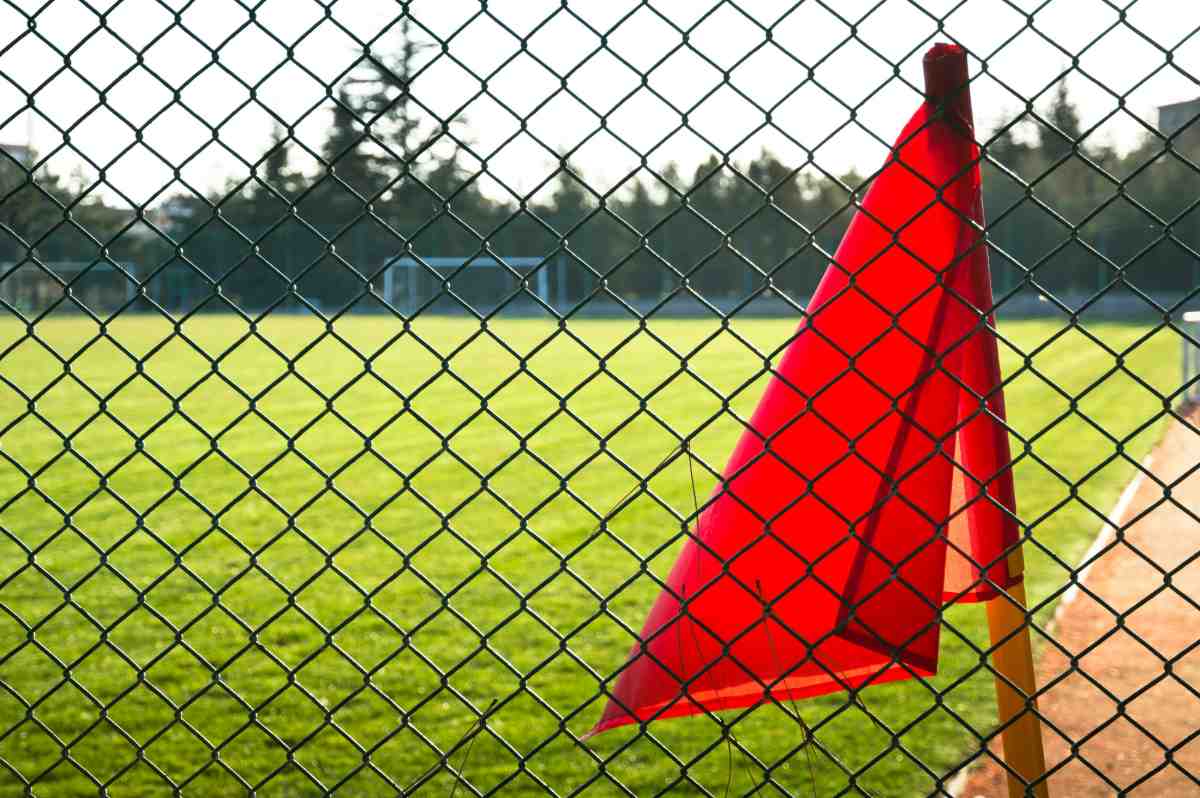
Flags turn an invisible line into a visible one. Your dog learns to link three things: the flag, the warning tone, and your cue word.
Think of invisible fence training flags as training wheels. They don’t contain your dog on their own. They teach the rule faster, then fade out once the habit is solid.
Most manufacturer training programs are built around flags for this reason. Dogs learn faster when a lesson has a visual anchor.
If your dog already blows through the boundary, read our guide on How to Train a Stubborn Dog on an Invisible Fence. Then come back here and rebuild the flag foundation.
Where to Place Invisible Fence Training Flags (and How Many)
A common guideline is one flag about every 10 feet along the boundary. If your manufacturer’s guide gives a different spacing, follow it.
Here is a simple setup routine:
- Find the warning line first. Use the collar’s warning tone or the test tool in your kit to find where the warning zone begins.
- Place flags at that line, not on top of the wire.
- Push them in firmly so wind and curious paws don’t knock them over.
- Add extra flags at corners, gates, and driveways. Those are the spots dogs test first.
- Walk the full perimeter to check for gaps.
Use bright flags in one consistent color. Mixed colors or random gaps confuse your dog.
Good placement is half the battle. Poorly spaced flags create weak spots your dog will find within days.
The 10-Day Invisible Fence Training Flags Plan
This plan is a template. Many manufacturers recommend about two weeks or more of short sessions, so check your system’s guide and adjust.
Keep sessions to 10 to 15 minutes, two or three times a day. Short and happy beats long and tense.
What You Need Before Day One
- A fitted collar (one finger of space between collar and neck)
- A 6-foot leash and a longer line for later
- High-value treats such as chicken or cheese
- Enough flags for the full boundary
- Your system’s guide, including the minimum age and weight for your dog
If your dog is younger or lighter than the guide allows, wait. Training before the system is appropriate for your dog can create fear.
Days 1 to 3: Introduce the Flags
Put your dog on a leash and walk the perimeter. Let him see and sniff each flag. Reward calm behavior.
If your system has a tone-only mode, use it now. When he reaches a flag and hears the tone, say your cue word, such as “Careful.” Guide him into a turn-away and reward him the moment he faces the yard.
Timing is everything. Tone, cue, turn, and treat should all happen within about two seconds.
During this phase, invisible fence training flags should predict good things, not scary ones. Keep your voice calm and upbeat.
Days 4 to 7: Teach the Turn-Around
Approach the flags from different angles and at different speeds. Keep the leash loose so you are guiding, not dragging.
If your dog pulls toward the line, stop, step back, and try again from farther away. Never drag a dog through the warning zone. That teaches him the boundary is a trap.
Add a favorite toy to the mix. Reward him for choosing to turn on his own.
If your dog gets overexcited and lunges during these sessions, our guide on How to Stop Leash Reactivity can help you build calm focus.
Days 8 to 10: Add Temptation
Now make it harder. Place a toy or treat just beyond the flag line, with your dog on a leash.
When he heads toward it, use your cue word and reward the turn-around with a bigger prize. A strong choice earns a jackpot.
Your manufacturer’s program will explain when and how to add the correction stage. Follow it step by step. Never skip ahead because your dog “seems ready.”
By the end of this stage, your dog should turn away from invisible fence training flags with very little help from you.
Signs Your Dog Understands the Flags
- He slows down or pauses when he sees a flag
- He glances back at you for a reward
- He turns toward the yard without being guided
- He stays relaxed, with loose body language and a wagging tail
Add Distractions Around Your Invisible Fence Training Flags
Your dog may behave perfectly on a quiet afternoon. Then a jogger passes and everything falls apart.
Real-world reliability only comes from real-world practice. Build up in levels:
- A calm friend walks far away on the other side of the boundary.
- The friend walks closer, or brings a calm dog.
- A ball rolls near the boundary.
- A bike, jogger, or other high-energy trigger passes by.
Keep your dog on a long leash at every level. Reward each correct turn with a top-tier treat.
If loud noises or sudden movement spook your dog during this stage, read our guide on How to Help a Dog With Noise Anxiety. A scared dog can’t learn, and fear can attach itself to the flags.
When to Remove Invisible Fence Training Flags Safely
Don’t pull flags by the calendar. Pull them by performance.
Your dog is ready when he:
- Turns away from the boundary reliably for at least two weeks
- Stays reliable in rain, at dusk, and in every part of the yard
- Responds to your cue word even with distractions around
Then fade the flags slowly:
- Remove every other flag and wait one week.
- Remove half of what’s left and wait another week.
- Keep corner and gate flags for last.
If he starts testing the line, put the flags back right away. Putting invisible fence training flags back up isn’t failure. It’s smart training.
Many owners keep a few flags up for life, especially at gates. That’s perfectly fine.
Also replant flags after mowing, snow, landscaping, or a long break from training. A changed yard can make a familiar boundary feel brand new to your dog.
Why Invisible Fence Training Flags Fail With Strong-Willed Dogs
Flags alone don’t hold a determined dog. If the reward outside is stronger than the lesson inside, he will cross.
Here are the most common reasons the flag stage breaks down:
- Sessions were too few or too short. One weekend isn’t enough. Strong-willed dogs often need several weeks.
- There was no reward for turning back. Without a payoff, the flag means nothing.
- Training only happened when things were quiet. Real life has squirrels.
- Flags came out early. The lesson wasn’t finished.
- The leash stage was skipped. The collar became the only teacher.
- Fear signs were ignored. A tucked tail, cowering, or refusing to go outside all mean stop and reset.
- The dog was left alone too soon. Supervise until he has been reliable for months, not days.
Terriers, hounds, huskies, and many herding breeds need more repetition. That is normal. More practice, not a higher setting, is the fix.
The best flag routine is boring, repetitive, and very rewarding for your dog.
Remember that an electronic boundary doesn’t keep other animals or people out. Never rely on it as your only safety measure, especially for dogs who love to roam.
When to See a Vet: Safety Checklist
Some problems have a medical or emotional cause. As you work with invisible fence training flags and the collar, watch for the signs below.
See a vet or certified behaviorist if you notice:
- Red, sore, or hairless patches on the neck where the collar sits
- Trembling, hiding, or yelping when the collar goes on
- Sudden refusal to go into the yard
- New aggression, panic, or destructive behavior
- Limping, stiffness, or signs of pain after a boundary run-through
- Disorientation, heavy drooling, or loss of control after a correction
Healthy training looks like this:
- Your dog turns away from the flags calmly
- He returns to you quickly for a reward
- He eats, plays, and relaxes in the yard normally
- The collar area stays clean, dry, and irritation-free
- You check the collar fit and rotate its position regularly
If any warning sign appears, stop using the collar and get professional guidance before you continue.
Frequently Asked Questions
How long should I keep invisible fence training flags up?
Most programs use flags for two to four weeks of active training, then fade them out over several more weeks. Strong-willed dogs often need longer. Remove flags based on your dog’s reliability, not the calendar.
How many invisible fence training flags do I need?
A common guideline is one flag every 10 feet along the boundary. A 200-foot perimeter needs about 20 flags, plus extras at corners and gates. Check your manufacturer’s guide for the exact spacing.
Can I train my dog without boundary flags?
It’s not recommended. Flags give your dog a visual cue that makes the warning tone easier to understand. Without them, most dogs learn more slowly and are more likely to test the boundary.
Conclusion: Invisible Fence Training Flags Build the Foundation
Patience wins here. When you combine flags with steady leash work, rewards, and real distractions, your dog learns the boundary instead of just enduring it.
Start today: walk the perimeter, check your flag spacing, and reward the first smart turn-around. Then fade the flags slowly, only when your dog has earned it.
If you’re still stuck after a few weeks, ask a certified trainer to watch one session. They can often spot the missing piece in minutes.


